Custom color matching
Industrial Paint Color Matching
Bring your color code, coated sample or paint chip. Build the order around the finish you actually need to repair.
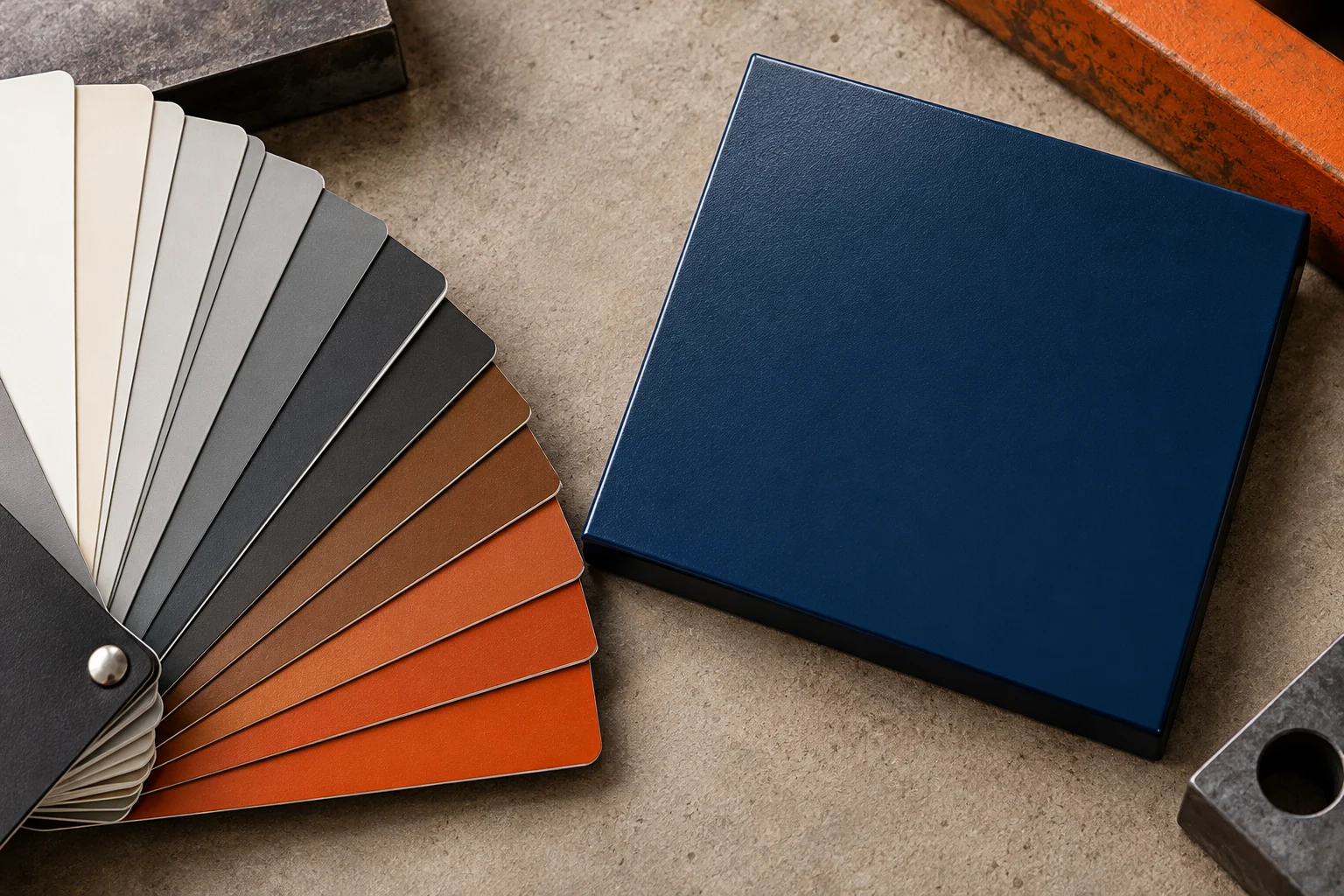
Specify the finish you want to match
Industrial paint color matching begins with a reference: a complete color code, an approved chip, a coated sample or an existing production finish. IPD’s custom aerosol service accepts these starting points and describes spectrophotometer matching as part of its process. The objective is to connect the requested appearance with a touch-up material suitable for the application.
A color reference does not answer every question about the finish. The same nominal color can be requested in different sheens, on different substrates or for different service conditions. A useful inquiry therefore combines the appearance reference with the original coating information and an explanation of what the repair needs to do.
Which color reference should you send?
| Reference available | What to include |
|---|---|
| RAL or Federal Standard reference | The complete identifier, source and specified finish |
| Coating manufacturer code | Manufacturer, product line, color number and sheen |
| Approved sample panel | Identification, approval date and original coating details |
| Finished production part | Substrate, condition and the area intended as the reference |
| Existing touch-up material | Product label, order details and any applicable documentation |
Keep the reference tied to the application. If a physical sample and a drawing specify different colors, resolve which governs before approving an order. Sending both without identifying the controlling reference leaves the matching team and the buyer working toward different targets.
Prepare a representative physical sample
Choose a sample that represents the finish you want supplied. Identify whether it is new production, an approved master, or an installed surface that has been in service. Mark the area that should be considered and describe any discoloration, contamination or damage rather than assuming the entire part is equivalent.
Confirm receiving arrangements with IPD before shipping. Protect the reference surface in transit and include a written identifier that also appears in your email. Keep a record of what was sent, who sent it and which project it belongs to. This simple preparation makes it easier to connect a delivered sample with the correct inquiry when several colors or jobs are being discussed.
Color, gloss and texture need separate attention
Color-measurement specialist X-Rite explains that surface appearance affects perceived color and that gloss and texture influence measurement choices. That is why a smooth sample and a textured part should not be treated as interchangeable visual references. A number or instrument reading needs the context of the surface being evaluated.
For your inquiry, describe the original sheen in the terminology available from the coating supplier. Add any texture or special-effect designation. Avoid inventing a numerical tolerance if the project has not defined one. Where acceptance is critical, the buyer and supplier need an agreed evaluation method rather than a general promise that a color will look “exact” under every condition.
The color and appearance guide provides a practical comparison worksheet and explains which observations to record.
A color match is not a coating-system approval
The color request and the material request are related but different. One identifies the appearance you want; the other identifies the product that can be used on the surface in its service environment. Provide the original coating manufacturer and product name, substrate, repair condition and relevant project requirements.
For a powder-coated surface, the proposed touch-up may be a liquid material applied after the original finish has cured. Its suitability should be evaluated as a repair system. For a specified industrial coating, send the approved repair requirement if one already exists. Selecting a matching color does not establish equivalent chemical resistance, corrosion protection or warranty coverage.
Define acceptance before ordering the production quantity
A clear approval brief answers four questions: what is the reference, who evaluates it, what conditions are used, and what counts as acceptance? For a manufacturer, the approver may be a quality or engineering representative rather than the purchasing contact. Identify that person early so a request for approval does not stop at the wrong department.
Ask IPD what match-review options are available for your order. This site does not promise a free sample, a particular instrument model, a numerical color tolerance or an unlimited number of adjustments. Those details belong in the agreed scope. Keep written approval linked to the reference and order so later decisions can be checked against the same information.
Matching new production versus an installed product
Decide whether the target is the original specified color or the appearance of the product as it exists today. These are different purchasing instructions. If an installed surface has changed in appearance, a new batch matched to the original reference may not blend with every part of it.
Describe the intended outcome instead of asking only for “the same paint.” For example, a buyer might need material tied to the factory specification for new shipments, while a service team might need to investigate a repair on one particular installed unit. Treat those as separate briefs until the relevant technical and appearance questions have been resolved.
Keep the match identifiable when you reorder
Retain the customer color name, approved identifier, original coating information and earlier order reference. A photo of the label can help the team locate those details, but should accompany a written explanation of the request. State whether the finish and application are unchanged.
Recurring colors can be discussed within an OEM program. For a defined job, use the single-order route. In either case, give quantities by color and do not assume that one overall quantity automatically satisfies the minimum for every formulation.
Color-matching questions
Can a photograph be the only reference?
Use photographs to explain the product, damage and location. For a critical appearance decision, arrange an agreed code or physical reference; a screen image should not become an assumed color standard.
Does a RAL number specify the entire coating?
No. The order also needs the coating product or chemistry, sheen, substrate and application. A color identifier is not a complete repair specification.
Can you match every texture or effect?
No universal capability is claimed here. Identify metallic, textured or other special finishes at the start so feasibility can be reviewed before a production order is placed.
What should I include in my email?
Send the full reference, original coating, finish description, quantity and application. Explain whether you have a sample and who will approve the match. The specification guide provides a ready-to-use checklist.
LET’S GET THE DETAILS RIGHT
Your color.
Your next step.
Tell us what you’re finishing. We’ll start with the application.
Discuss your project