OEM touch-up programs
OEM Touch-Up Paint Programs
A repeatable supply of custom-matched, branded aerosol paint for manufacturers who need touch-up to travel with the product.
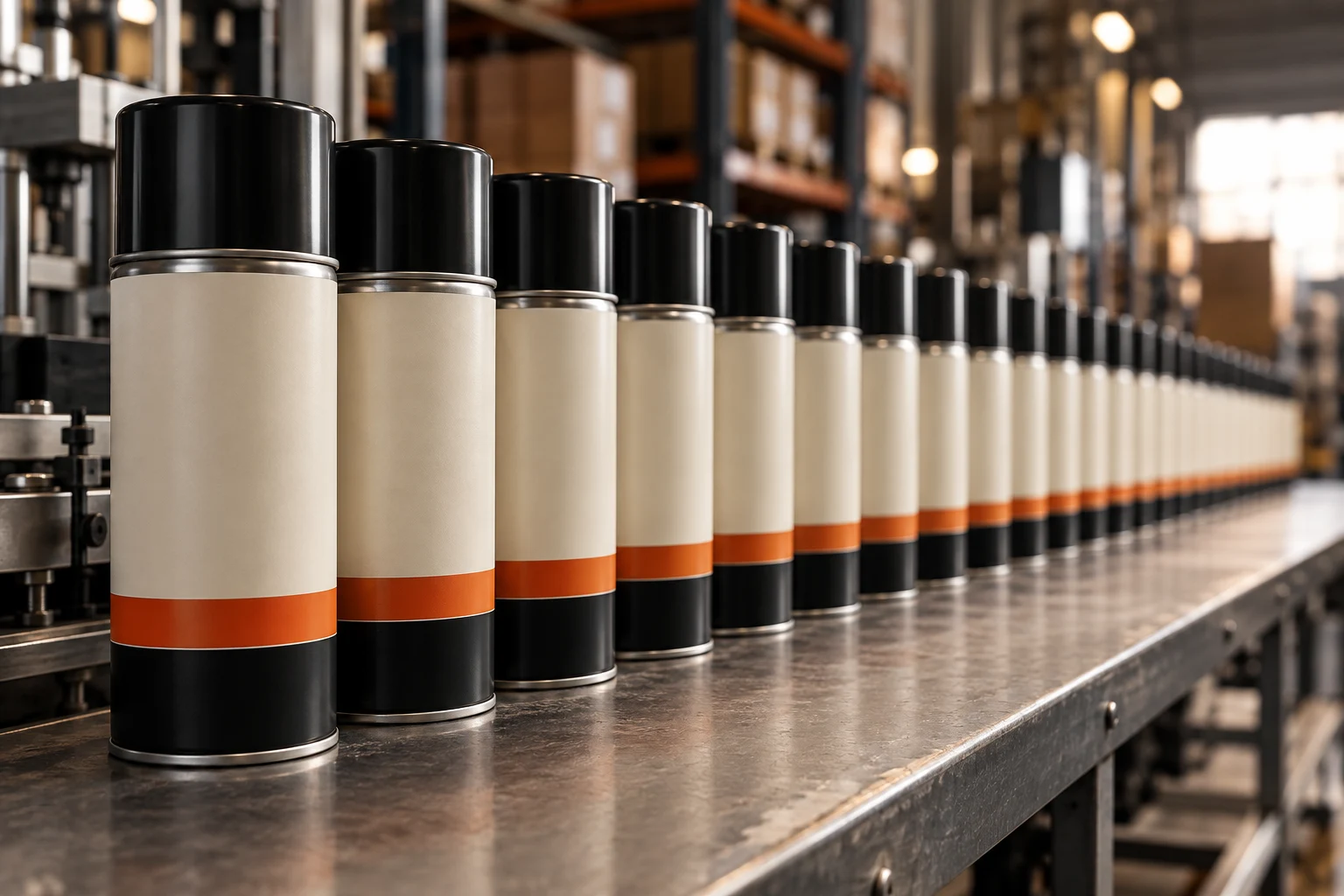
A touch-up supply program for manufacturers
IPD’s OEM touch-up program connects a manufacturer’s production colors with custom-labeled aerosol paint for later repairs. It is intended for businesses that repeatedly ship finished products, rather than buyers looking for a single retail can. The work begins with the coating and color specification, then moves through matching, labeling, filling and delivery planning.
The practical question is not simply “Can you match our gray?” It is “Can our production, purchasing and service teams identify and order the right touch-up material for this product?” A useful program gives those teams a shared reference. IPD’s existing program description includes stocked matches and filling against the customer’s shipment cadence, with a published minimum of 96 cans.
When an OEM program makes sense
A recurring program is worth evaluating when the same production colors appear on successive builds, when touch-up accompanies equipment deliveries, or when a service department receives repeated requests for matching paint. Manufacturers of modular structures and enclosures, industrial equipment and fabricated assemblies can approach the decision from different operational needs.
Start by listing the colors used repeatedly and the departments that request them. Separate standard production colors from occasional project-specific finishes. If the need is limited to a single job, a custom aerosol batch may be the simpler starting point. A program should support a recurring purchasing requirement, not create inventory that the business has no plan to use.
What to define in your program scope
| Program element | Decision to record |
|---|---|
| Color reference | Approved sample or specification, sheen and customer identifier |
| Coating selection | Existing system, repair environment and proposed touch-up material |
| Label | Brand artwork, color name, part number and product information |
| Quantity | Initial run, allocation across colors and expected repeat demand |
| Fulfillment | Delivery destination and relationship to the build schedule |
| Reordering | Order reference, responsible buyer and change notifications |
These items form a purchasing brief. They are not a promise that every proposed configuration is available. In particular, the published 96-can minimum does not explain how multiple colors are counted. Put the proposed color quantities in the inquiry so the quote can make that allocation explicit.
Onboard the finish, not just the color name
IPD lists RAL references, Federal Standard references, paint chips, coated samples and existing touch-up paint among the information customers can provide. Its published process describes spectrophotometer matching. For the buyer, the important next step is agreeing on what will be used as the approval reference and who will approve it.
A color name such as “equipment gray” can become ambiguous when different facilities, suppliers or production years use it. Add the original coating manufacturer and product identifier where available. Record gloss, texture and whether the reference represents new production or an aged installed surface. Our industrial color-matching page explains how to prepare that reference.
Make the can useful to the next person
A branded can has an operational role as well as a marketing role. The person receiving it needs to distinguish the intended finish from other materials in a service vehicle, jobsite cabinet or maintenance store. IPD’s program description includes customer wordmarks, color names, part numbers and facility codes on custom labels.
Build an artwork approval step into the first order. Confirm which identifiers should remain stable across reorders and which information changes by batch. The private-label service page covers the labeling brief in more detail. Customer branding does not replace the supplied product’s required safety and handling information.
Separate setup timing from replenishment timing
A first order can involve sample receipt, formulation review, match approval and artwork approval. A repeat order may begin from an established reference, but it still needs a confirmed quantity and delivery commitment. Request dates for these stages separately instead of treating one headline turnaround as a guarantee for every order.
IPD describes delivery to a customer’s yard, warranty department or customer site. Explain your intended destination and whether paint must arrive before a build leaves, with the build, or later for service. A useful schedule identifies the required arrival date, the approval deadline and the person who can resolve questions that would otherwise delay the order.
A published example: Hunter Buildings
IPD identifies Hunter Buildings as an OEM program customer. The published example describes matching customer color specifications and supplying Hunter-branded aerosol cans with building shipments. It illustrates the program’s basic purpose: keeping touch-up supply connected to the original product and its color reference.
Read the customer program summary for the documented scope. It does not establish measured savings, a guaranteed match to a weathered building, or approval of a repair for every exposure condition. Those are separate questions from whether a branded supply program is operationally useful.
OEM program questions
Does an aerosol program preserve our product warranty?
It can support your service process, but it does not by itself establish warranty compliance. The responsible manufacturer or project specifier must approve the repair material and procedure where required.
Can we include several production colors?
Describe each color and its expected quantity in the inquiry. Ask the quote to state minimums and pricing by color or formulation; do not assume a combined order meets every requirement.
What should purchasing send first?
Send your product type, original coating information, color list, estimated demand, label requirements and shipment schedule. Identify the technical approver as well as the purchasing contact. Use the specification checklist to assemble a complete brief.
How is a reorder distinguished from a new match?
Include the earlier order and color identifiers, then state whether the coating, finish or application has changed. A familiar name alone is not enough to show that the specification is unchanged.
LET’S GET THE DETAILS RIGHT
Your color.
Your next step.
Tell us what you’re finishing. We’ll start with the application.
Discuss your project